

Mastering High-Performance Industrial Bonding: Comprehensive Product Profile and Application Guide for 3M™ 9448A Double-Coated Tissue Tape
SHENZHEN, China — October 26, 2026 — As modern manufacturing demands higher precision, faster assembly cycles, and durable multi-substrate adhesion, 3M™ 9448A Double-Coated Tissue Tape continues to establish itself as a benchmark bonding solution across consumer electronics, automotive interiors, home appliances, and precision die-cutting applications.
This comprehensive release provides an in-depth technical analysis of 3M™ 9448A, examining its material engineering, performance benchmarks, and best-practice application protocols to help engineers, converters, and assembly technicians achieve optimal bonding integrity.
Part 1: Product Overview & Technical Profile
What is 3M™ 9448A?
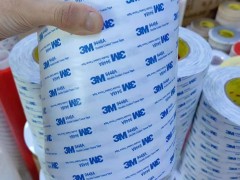
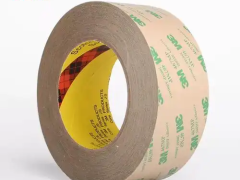
3M™ 9448A is a 0.15 mm (6.0 mil) double-coated pressure-sensitive tape engineered with a high-tack, medium-firm acrylic adhesive formulation coated onto both sides of a flexible non-woven tissue carrier. Protected by a dimensionally stable polycoated paper release liner, 3M™ 9448A is specifically formulated to bridge high-speed production capability with enduring bond strength.
Key Technical Specifications
Part 2: Core Engineering Advantages
Superior Multi-Substrate Adhesion:
Unlike standard acrylic adhesives that struggle on low surface energy (LSE) materials, 3M™ 9448A exhibits aggressive wet-out and exceptional adhesion to both high surface energy (HSE) substrates (stainless steel, aluminum, glass, ceramics) and medium/low surface energy plastics (polycarbonate, ABS, polypropylene, polystyrene, powder-coated finishes).Tissue Carrier Stability for Precision Converting:
The non-woven tissue carrier provides tensile strength and structural rigidity during high-speed rotary and flatbed die-cutting. It prevents adhesive oozing, edge-lift, stretching, and distortion during kiss-cutting, slitting, and automated robotic placement.High Initial Tack with Balanced Shear Strength:
Delivers immediate handling strength upon application, accelerating assembly line throughput while developing permanent shear resistance that withstands dynamic vibrations and mechanical stress over product lifecycles.Conformability on Irregular Surfaces:
The pliable tissue core adapts comfortably to slight surface contours, micro-textures, and moderately curved profiles without buckling or creating localized stress concentrations.
Part 3: Step-by-Step Application & Processing Guide
To maximize bonding strength and eliminate failures such as delamination, bubbling, or premature peeling, operators should follow this standard four-phase procedure:
Phase 1: Surface Preparation (Decontamination)
A bond is only as strong as the cleanliness of the substrate. Contaminants such as oils, dust, mold release agents, and moisture create barrier layers that prevent molecular contact.
Standard Cleaning Solution: Use a 50:50 mixture of Isopropyl Alcohol (IPA) and clean deionized water.
Heavy Contaminants: For heavy oils or grease, pre-clean with a degreasing solvent (e.g., heptane or acetone for compatible plastics/metals), followed by the IPA/water wipe.
Cleaning Technique: Always use a clean, lint-free wipe using the "two-cloth method"—wipe in one direction with the wet cloth, immediately followed by a dry cloth before the solvent evaporates.
Phase 2: Application Temperature Control
Ideal Application Window: 21°C to 38°C (70°F to 100°F). In this range, the acrylic adhesive displays optimal viscosity to wet out microscopic surface irregularities.
Minimum Recommended Application Temperature: 10°C (50°F). Below this threshold, the adhesive becomes too firm to develop sufficient initial tack.
Pro Tip: If applying in cold environments, pre-warm substrates to approximately 25°C–35°C using an infrared lamp or hot-air tunnel before tape lamination.
Phase 3: Pressure Application (Activating the PSA)
3M™ 9448A is a Pressure-Sensitive Adhesive (PSA); mechanical pressure is essential to force intimate wet-out across the interface.
Target Pressure: Minimum 15 psi (approx. 100 kPa / 1.0 kg/cm²) across the entire bonding area.
Tooling: Use rubber-coated rollers, pneumatic press platens, or calibrated hand pressure rollers. Avoid point-load tools that might crush the tissue core or cause uneven adhesion.
Phase 4: Dwell Time & Ultimate Strength Development
Acrylic pressure-sensitive adhesives require time for adhesive polymer chains to flow and interlock with surface micro-structures.
20 Minutes post-application: ~50% of ultimate bond strength developed.
24 Hours post-application: ~90% of ultimate bond strength developed.
72 Hours post-application: 100% full bond strength attained.
Acceleration Tip: Exposing the assembled components to elevated temperatures (e.g., 50°C to 65°C for 1 to 2 hours) will accelerate adhesive flow and achieve near 100% strength within hours.
Part 4: Primary Industry Applications
Consumer Electronics & Smart Devices:
Bonding acoustic mesh, speaker grilles, touch-panel modules, battery compartment gaskets, LCD/OLED lens bezels, and flexible printed circuits (FPCs).Automotive Interiors:
Securing dashboard trim overlays, door-panel vibration-damping pads, electronic sensor brackets, and cable harness positioning.Nameplates, Badges & Membrane Switches:
Permanent mounting of embossed metal badges, plastic emblems, control panel overlays, and graphic fascias.Foam, Rubber & Gasket Lamination:
Serving as a carrier adhesive backing for polyurethane (PU), ethylene-vinyl acetate (EVA), EPDM foam weatherstrips, and silicone sponge sheets.